Glucocorticoids and Appetite Neuropeptide Regulation
Educational exploration of how glucocorticoids influence appetite-regulating peptides in the hypothalamus.
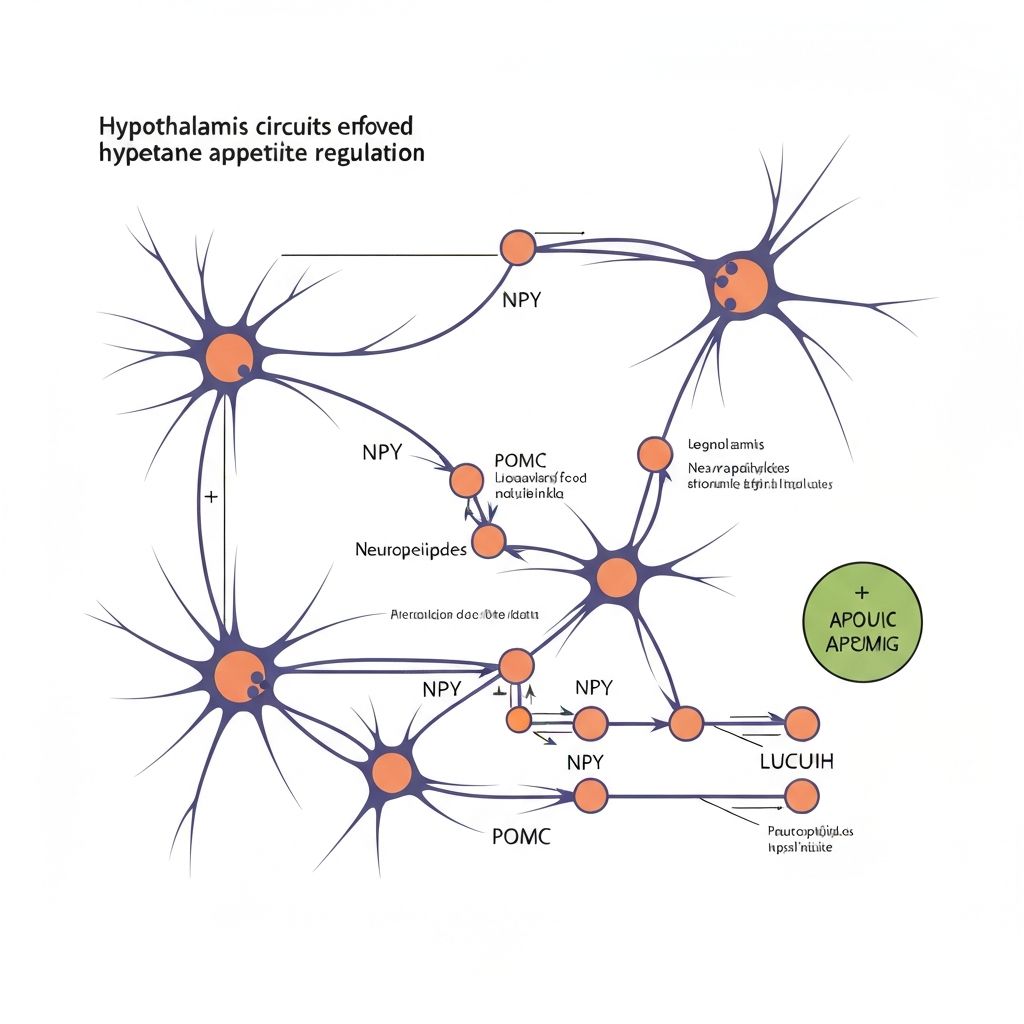
The Hypothalamic Appetite Centres
The hypothalamus contains specialised neural circuits that regulate energy intake and expenditure. Different hypothalamic nuclei contain distinct populations of neurons that either promote eating behaviour (orexigenic neurons) or suppress it (anorexigenic neurons). These neurons communicate through release of neuropeptides—signalling molecules that influence feeding behaviour, metabolic rate, and energy balance. Understanding how glucocorticoids modulate these neuropeptide systems helps explain how chronic stress influences appetite and food intake patterns.
Glucocorticoids alter the balance between appetite-stimulating and appetite-suppressing neural signals.
Neuropeptide Y (NPY): The Appetite-Stimulating Peptide
Neuropeptide Y is one of the most potent appetite-stimulating (orexigenic) peptides in the brain. NPY neurons are concentrated in the hypothalamic arcuate nucleus and project widely throughout the hypothalamus and beyond. When released, NPY powerfully increases appetite and food-seeking behaviour and promotes energy conservation. Chronic glucocorticoid exposure increases the expression (production) of NPY and enhances its release within the hypothalamus. This increased NPY signalling creates a state favouring increased food intake—a mechanism linking chronic stress to elevated appetite drive.
Pro-Opiomelanocortin (POMC) and Appetite Suppression
Pro-opiomelanocortin (POMC) neurons also reside in the hypothalamic arcuate nucleus, often in proximity to NPY neurons. POMC is a precursor peptide that is cleaved to produce alpha-melanocyte-stimulating hormone (α-MSH), a potent appetite-suppressing (anorexigenic) agent. α-MSH acts on melanocortin-4 receptors throughout the hypothalamus to reduce appetite and promote satiety. Chronic glucocorticoid exposure reduces POMC expression and activity, thereby decreasing the appetite-suppressing signals emanating from these neurons. The net effect of reduced POMC activity is a diminished appetite-suppressing tone.
The NPY-POMC Balance
Normal appetite regulation involves a balance between NPY's appetite-promoting actions and POMC's appetite-suppressing actions. Chronic glucocorticoid exposure disrupts this balance by increasing NPY and decreasing POMC simultaneously, creating a dual effect: increased appetite drive coupled with decreased appetite suppression. This neurochemical shift explains why chronic stress frequently associates with increased appetite and food intake—it represents a fundamental alteration in the brain's appetite control circuits favouring increased eating.
Additional Glucocorticoid Effects on Appetite Pathways
Beyond NPY and POMC, glucocorticoids influence other appetite-regulating systems. Glucocorticoids can affect AgRP (agouti-related peptide) neurons, which promote feeding; ghrelin signalling, which stimulates appetite; and leptin sensitivity, which normally suppresses appetite. Chronic glucocorticoid exposure generally amplifies orexigenic (appetite-promoting) signals whilst attenuating anorexigenic (appetite-suppressing) signals across multiple interconnected pathways.
Functional Consequences
The net result of glucocorticoid-induced changes in neuropeptide systems is a measurable increase in appetite, food intake, and preference for energy-dense foods. In acute stress, these changes might be adaptive, supporting behavioural coping responses. However, in chronic stress with persistently elevated glucocorticoids, the sustained elevation of appetite drive exceeds actual energy expenditure, contributing to increased energy intake and positive energy balance—conditions favouring energy storage and weight gain.
Individual Variability
The magnitude of appetite changes in response to glucocorticoid elevation varies between individuals. Genetic factors affecting glucocorticoid receptor expression, neuropeptide receptor sensitivity, and baseline hypothalamic function influence how strongly individuals respond to stress-induced appetite stimulation. Some individuals show marked appetite increases during stress, whilst others maintain relatively stable appetite—a variability that contributes to diversity in stress-weight associations across populations.
Research Findings
Laboratory studies manipulating glucocorticoid levels document dose-dependent increases in appetite and food intake. Neuropeptide measurement studies show elevated NPY and reduced POMC in stressed animals and humans. Neuroimaging studies reveal altered activation in hypothalamic appetite centres during acute stress. This multi-level evidence supports the concept that glucocorticoids powerfully modulate appetite-regulating neuropeptide systems.
Important Note: This information is educational only. It describes general physiological mechanisms but does not constitute medical advice. Individual appetite responses to stress vary substantially. Consult qualified healthcare professionals for concerns about your health or eating patterns.